What is the role of a modern higher education institution in the community? How can we build connections with students, schools, businesses, alumni, and local residents so that cooperation creates real value? These questions were at the heart of the international Blended Intensive Programme (BIP) “Universities and Community Engagement.”
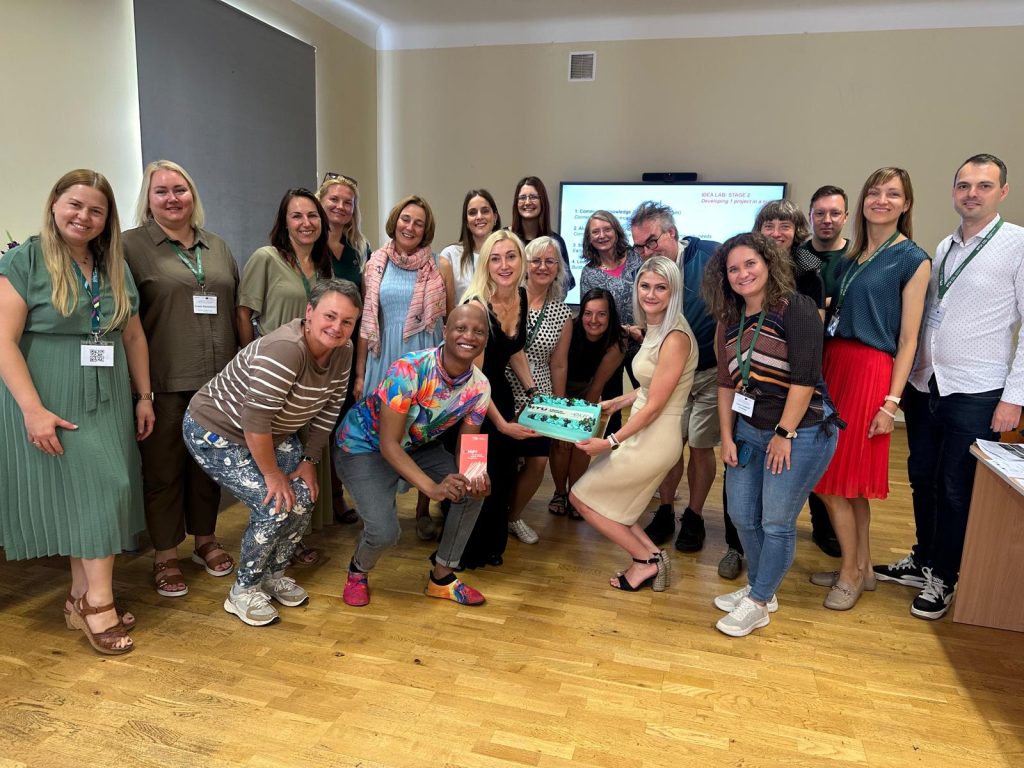
Rasa Žilionė, Project Manager at the Training and Cooperation Development Department of the Faculty of Business Management at Vilniaus kolegija (VIKO), took part in the programme held in Liepāja in August. Organised by RTU Liepāja Academy, the programme brought together representatives of higher education institutions from Finland, Latvia, Lithuania, Slovenia, Hungary, Germany, Spain, the Czech Republic, Croatia, and Romania. Participants shared experiences from their institutions and worked together to identify ways to strengthen cooperation between higher education institutions and their communities.
The five-day programme focused on different forms of cooperation between higher education institutions and communities. Participants discussed strategic communication, alumni engagement, as well as the use of artificial intelligence and marketing automation to engage communities of international students.
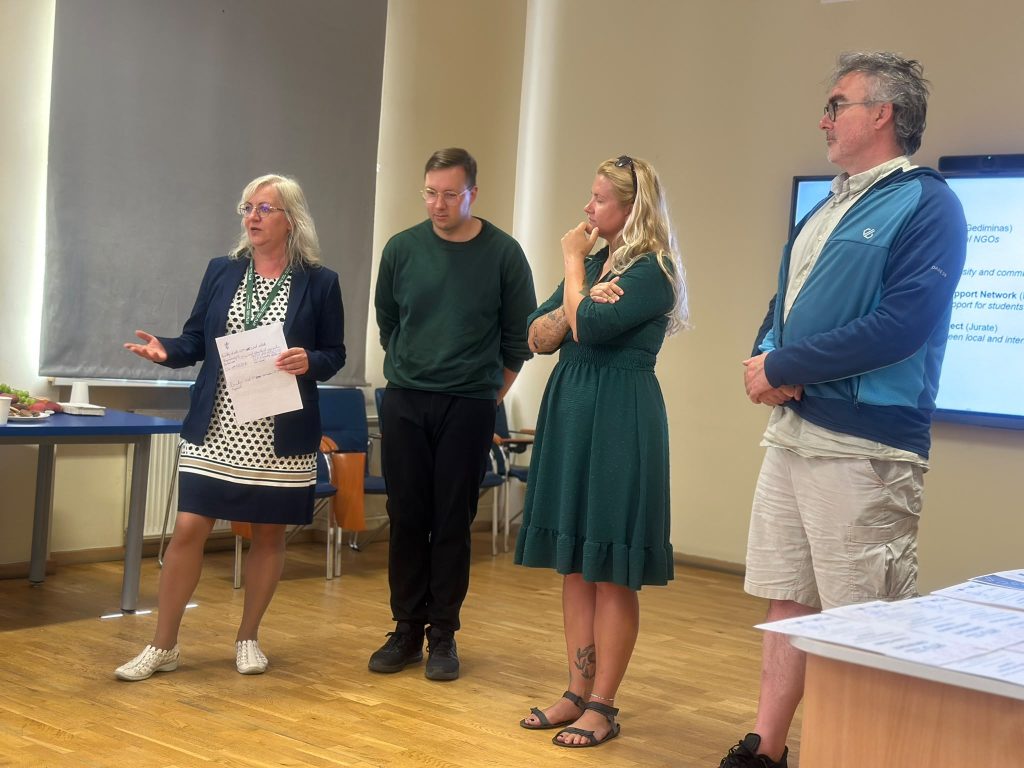
An important part of the programme was the creative working sessions of the “Community Engagement Idea Lab.” Working in international groups, participants developed community engagement initiatives, discussed their potential impact, and considered how the ideas presented during the programme could be applied within their own institutions.
The BIP week in Liepāja provided an opportunity to share experiences among higher education institutions from different countries, establish new professional connections, and bring back ideas that can be applied to strengthen Vilniaus kolegija’s collaboration with students, schools, businesses, and other communities.
A higher education institution does not stand apart from the community around it – it is part of that community. Openness, dialogue, and joint initiatives allow knowledge to move beyond the classroom, while the needs and ideas of the community can become an important part of the institution’s activities.